How This Guide Was Created
We use Perplexity to gather real-world user patterns from Reddit and YouTube dermatologists, cross-checking all advice against UK dermatology clinic guidance. We analyse device heat issues and strap-pressure failures to prioritise safety over marketing claims.
How Retinoids Change Your Skin vs. LED
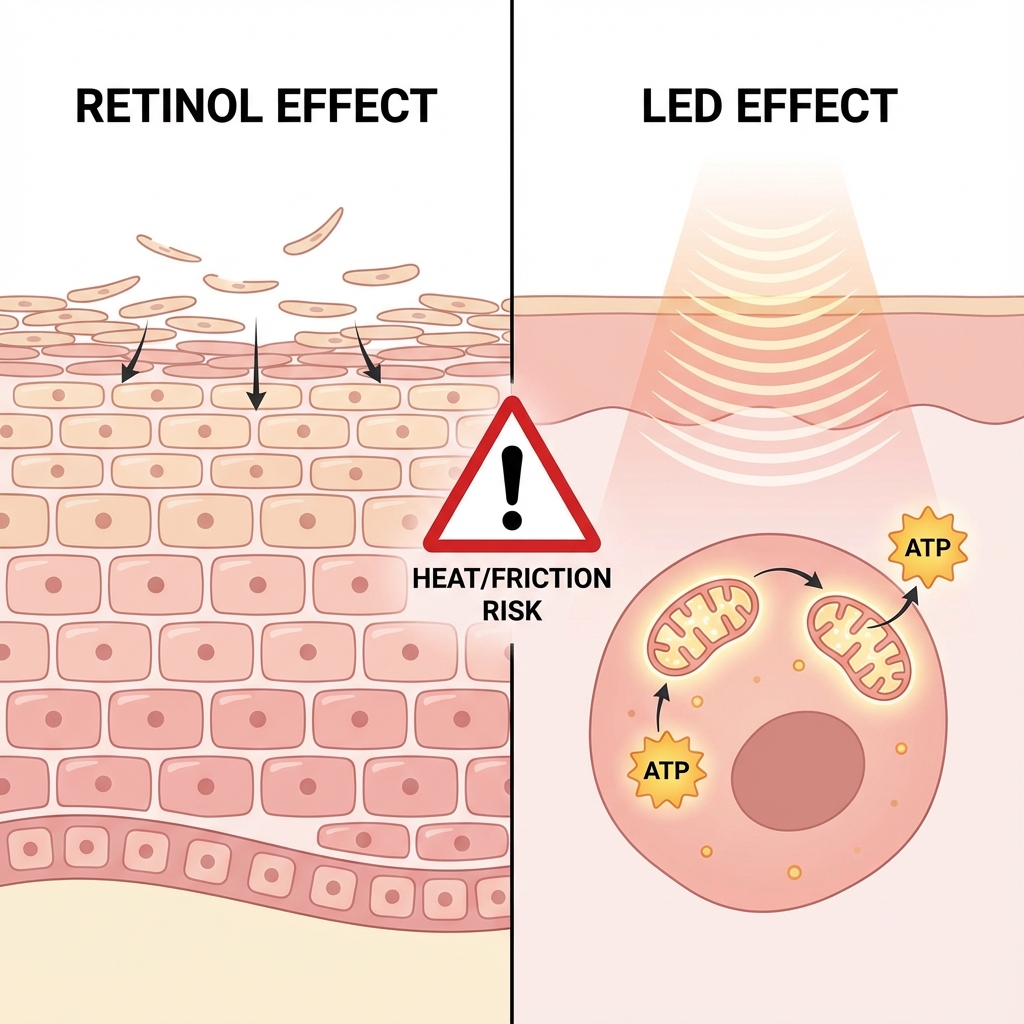
To understand why caution is needed, we have to look at how retinoids (retinol, retinal, tretinoin) change your skin's physiology compared to what LED does:
Retinoid Mechanism
- Thins the Stratum Corneum: Speeds up dead cell shedding, temporarily removing your skin's natural "heat shield".
- Increases Transepidermal Water Loss (TEWL): Makes skin lose water faster, leading to underlying dehydration even if not visible.
- Heightens Nerve Sensitivity: Exposed nerve endings become more reactive to heat, friction, and even mild light warmth.
LED Mechanism (Red/NIR)
- Mitochondrial Boost: Increases ATP energy to power repair, often helpful between retinoid nights.
- Circulation Surge: Increases blood flow, which contributes to the "glow" but can also increase flushing in sensitised skin.
- Occlusive Heat: The mask itself traps heat against the face. On retinised skin, this trapped heat is often the trigger for irritation, not the light itself.
The Conflict: While red light is healing, the heat and direct contact on a barrier thinned by retinoids can trigger "retinoid burn" or dermatitis.
When NOT to Combine LED & Retinoids
Do not attempt to use an LED mask in the same routine (or even the same week) if you fall into these categories:
- The "Retinisation" Phase: First 3–6 months of a new prescription (e.g. Tretinoin). If you have any peeling, stinging, or redness, skip LED.
- Melasma Prone to Heat: If your melasma flares with summer heat, trapping heat under a mask while on retinoids can darken pigmentation.
- Photosensitising Medications: If you are taking oral antibiotics (like doxycycline/tetracycline) or other drugs labelled as photosensitising.
- Active Dermatitis: Broken skin, weeping patches, or perioral dermatitis. LED heat will likely worsen this.
- Unregulated Devices: Cheap masks with hot spots. Hot spots on retinoid-thinned skin can cause focal burns or blisters.
When It Is Generally Safe
Many dermatologists agree LED and retinoids can work synergistically in long-term plans, but only once the barrier is robust. It is generally safer when:
- You are Fully Acclimatised: You have been using your current retinoid strength for 6+ months with zero irritation.
- You Use the "Alternate" Method: LED is used on nights you don't apply retinoids, or in the morning.
- Healthy Barrier: Your skin feels hydrated and calm before you even turn the mask on.
- Proper Equipment: You use a reputable device (CurrentBody, Omnilux, Dr Dennis Gross) with controlled output and standard 3-10 minute sessions.
Scheduling: How to Fit Both In
These three patterns appear most frequently in successful real-world user logs and dermatology advice:
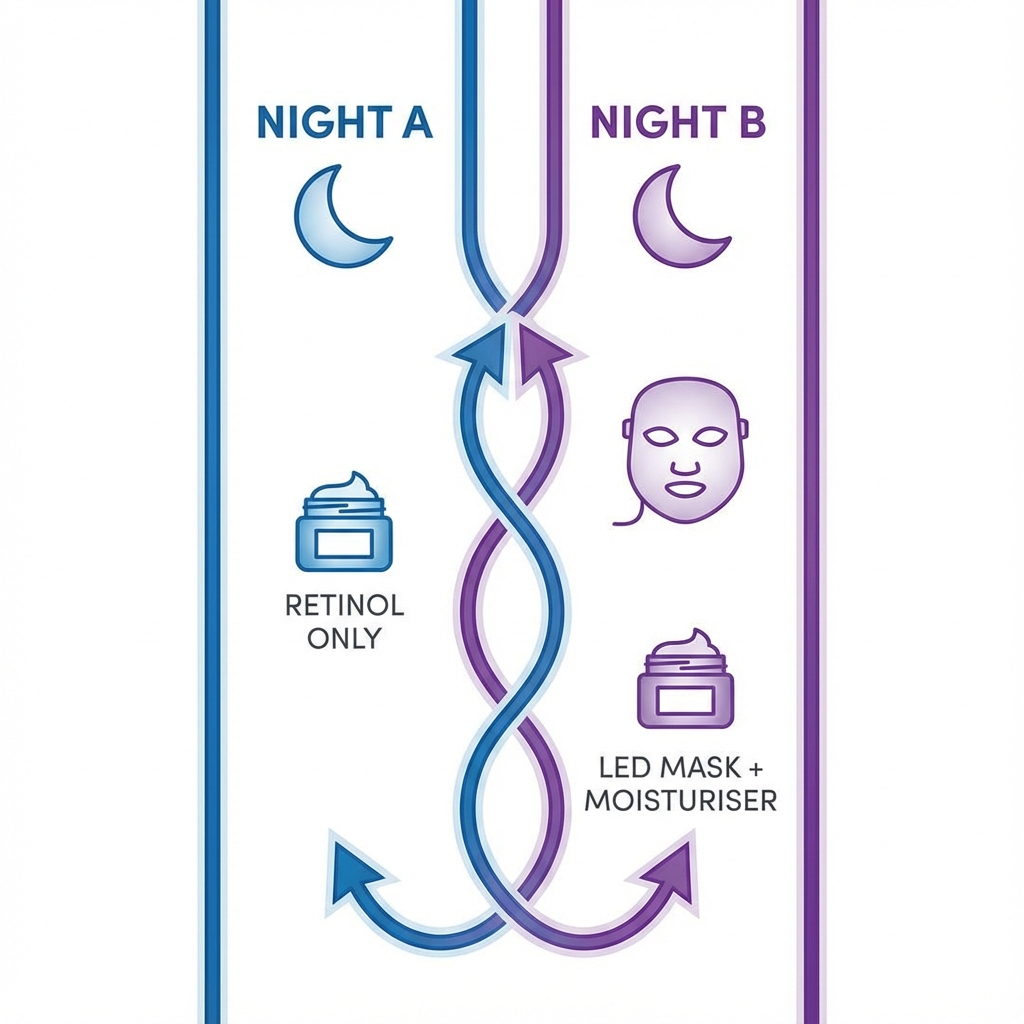
The "Alternate Nights" Method
Best for: New retinol users, rosacea-prone skin.
- Mon: Retinoid (No LED)
- Tue: Cleanse → LED → Moisturise
- Wed: Rest / Hydration
- Thu: Retinoid (No LED)
- Fri: Cleanse → LED → Moisturise
- Sat/Sun: Rest
Keeps potential irritants completely separate.
The "AM / PM" Split
Best for: Daily LED users, stable retinol users.
- Morning: Cleanse → LED Session (10 mins) → SPF.
- Evening: Cleanse → Retinoid Routine.
Ensures bare skin for LED, prevents stacking irritation.
The "Wait & Layer" Method
Best for: Long-term Tretinoin users (>1 year).
- Step 1: Cleanse face thoroughly.
- Step 2: LED Mask (10 mins).
- Step 3: Wait 20–30 mins (Skin cools).
- Step 4: Apply Retinoid.
Only for tough, fully acclimated skin barriers.
What to Expect: A Realistic Timeline
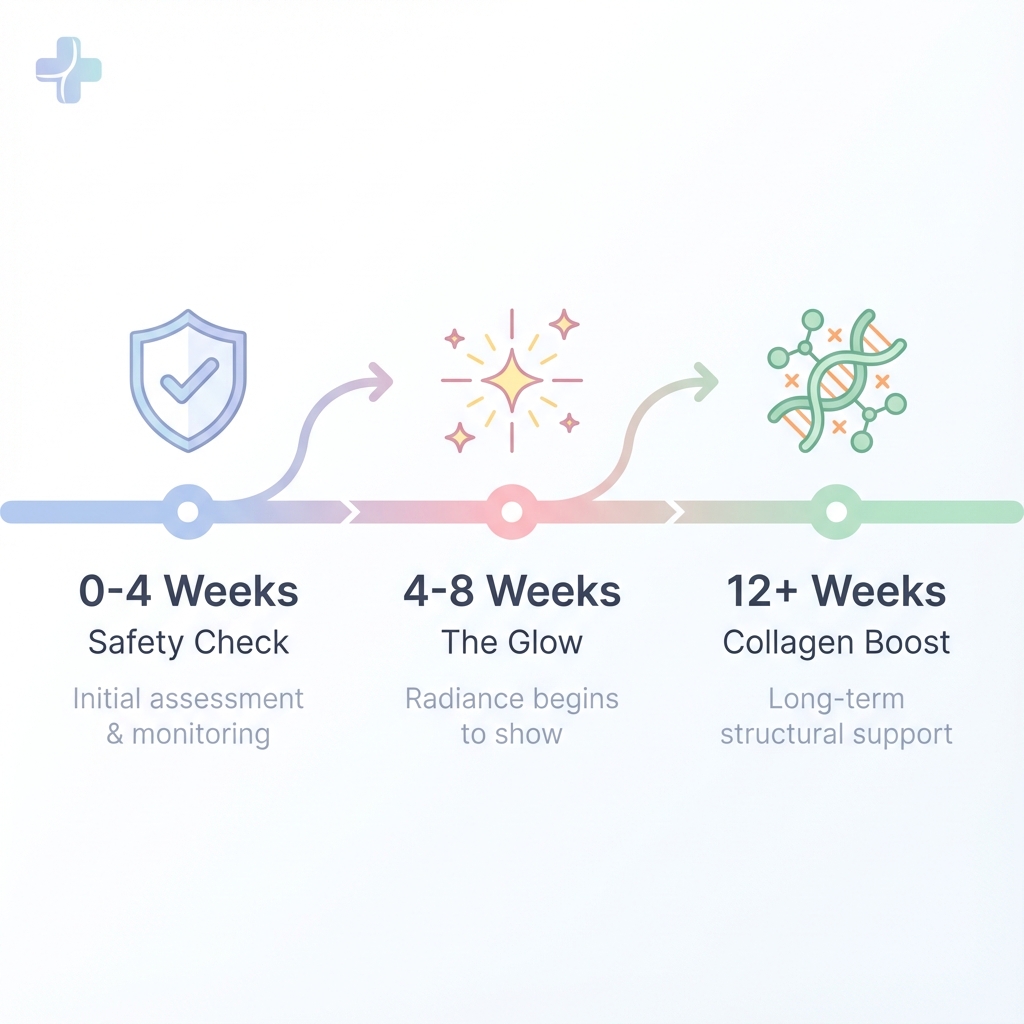
- Weeks 0–4: Focus on safety. You likely won't see "better" results yet; the goal is simply to verify that extra light/heat doesn't cause dryness. Any redness = skip a session.
- Weeks 4–8: "The Glow" phase. Many users report smoother texture and calmer tone here, provided they haven't overdone the frequency.
- Weeks 12+: Compounding effects. Long-term, consistent low-dose LED usage alongside retinoids may support collagen density better than either alone, but patience is key.
The Hidden Risk: Heat & Straps
Often, it's not the light that burns retinol users—it's the device itself.
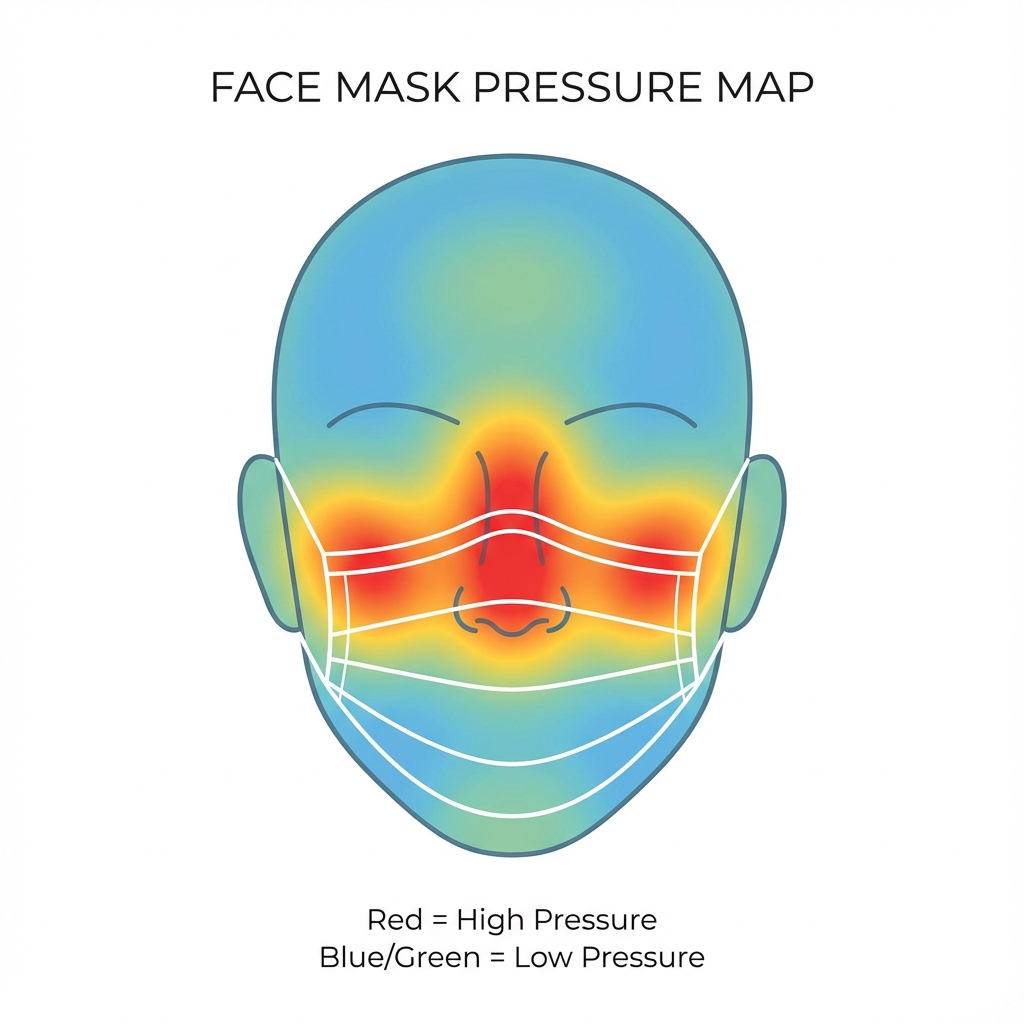
- Occlusion (Trapped Heat): Masks that sit flush against the face can trap your natural body heat and the device's heat. On retinised skin, this 10-minute "mini-sauna" can trigger dermatitis.
- Mechanical Friction: Straps that pull tight on the cheekbones or nose bridge can cause physical abrasion. Retinised skin rubs off easily, leading to raw sore spots under strap points.
High Heat RiskAvoid Cheap Amazon Masks | ||||
|---|---|---|---|---|
| Heat accumulation | Low (silicone breathes) | Moderate (rigid shell) | None (air gap) | High (variable/hot spots) |
| Pressure on barrier | Gentle contact | Pressure points (straps) | Zero contact | Heavy/Uncomfortable |
| Retinoid safety rating | High (with caution) | Moderate (watch duration) | Very High | Low (risk of burn) |
| Best for | Regular maintenance | Time-poor users | Active sensitivity | None (safety risk) |
Common Mistakes & "Horror Stories"
"I started Tretinoin and daily LED at the same time"
The Result: Severe "sunburn-like" reaction, peeling, and barrier collapse.
The Fix: Never start two powerhouses at once. Establish retinoid tolerance for 3 months before even buying a mask.
The "Melasma Heat" Flare
The Result: Darkened patches after using a mask that got too warm on the face. Heat stimulates melanocytes.
The Fix: If you have melasma, avoid heavy/hot masks. Use a panel (no heat contact) or a highly breathable silicone mask on lower settings.
The "Everything Everywhere" Routine
The Scenario: User applied Acid Toner + Vitamin C + LED + Tretinoin in one night.
The Result: Massive irritation. LED is not "neutral"—it stimulates. Stacking it with acids AND retinoids is too much for most skins. One active per night.
Retinol & LED FAQs
Can I use tretinoin and an LED mask on the same night?
Sometimes, but usually not at first. Most dermatologists recommend keeping them on separate nights (e.g., LED in the morning or on 'off' nights) for the first 3–6 months. You should only combine them if your skin is fully stabilised and comfortable.
Should I apply retinol before or after the LED mask?
Always after. Light can degrade some retinoid formulations, and applying a potent active before adding heat can increase penetration unpredictable. The safest order is: Cleanse → LED (clean dry skin) → Wait 10-30 mins → Retinoid.
Does red light therapy interact with retinol?
Not chemically (unlike UV light), but they interact biologically. Retinoids thin the stratum corneum, making your skin more sensitive to the heat and brightness of the mask. This is why 'low and slow' is the rule.
I have rosacea and use retinol. Is LED safe?
Proceed with extreme caution. The combination of retinoid sensitivity + LED heat (even mild warmth) can trigger flushing or permanent redness. Many rosacea sufferers prefer panel devices that sit away from the skin to avoid heat trapping.
Can I use an LED mask in the morning and retinol at night?
Yes, this is widely considered the safest daily pattern. It physically separates the light/heat session from the active ingredient application, giving your barrier time to recover in between.
What if my skin feels hot or tight after using both?
Stop immediately. This suggests compromised barrier function. Pause the LED mask and reduce retinoid frequency. Focus on barrier repair (ceramides, panthenol) for 2 weeks before reintroducing LED slowly.
Sources & Citations
- Journal of Clinical Aesthetic Dermatology: Phototherapy and Retinoid Synergy.
- British Association of Dermatologists: Topical Retinoid Guidelines.
- User Consensus: r/Tretinoin 'Peel & Heal' protocols.
- Device Safety Specs: Heat output vs. retinised skin threshold.
Found Your Routine? Choose the Right Device
For retinoid users, we prioritise flexible medical-grade silicone or non-contact panels to minimise friction and heat.
Medical Disclaimer: GlowLab does not provide medical care. LED masks and skincare actives may interact unpredictably for sensitive users. Always consult a dermatologist if you use prescription actives (tretinoin, azelaic acid, antibiotics) or have a skin condition.