How This Guide Was Created
We use Perplexity to gather real-world user patterns from Reddit and YouTube dermatologists, cross-checking all advice against UK dermatology clinic guidance. We analyse device heat issues and strap-pressure failures to prioritise safety over marketing claims.
The Clinical Consensus: Is it Safe?
In short: Yes, when used correctly.
Unlike UV light (which causes cancer) or Lasers (which burn/obliterate tissue), LED light is "photobiomodulation". It is low-energy and non-ionising.
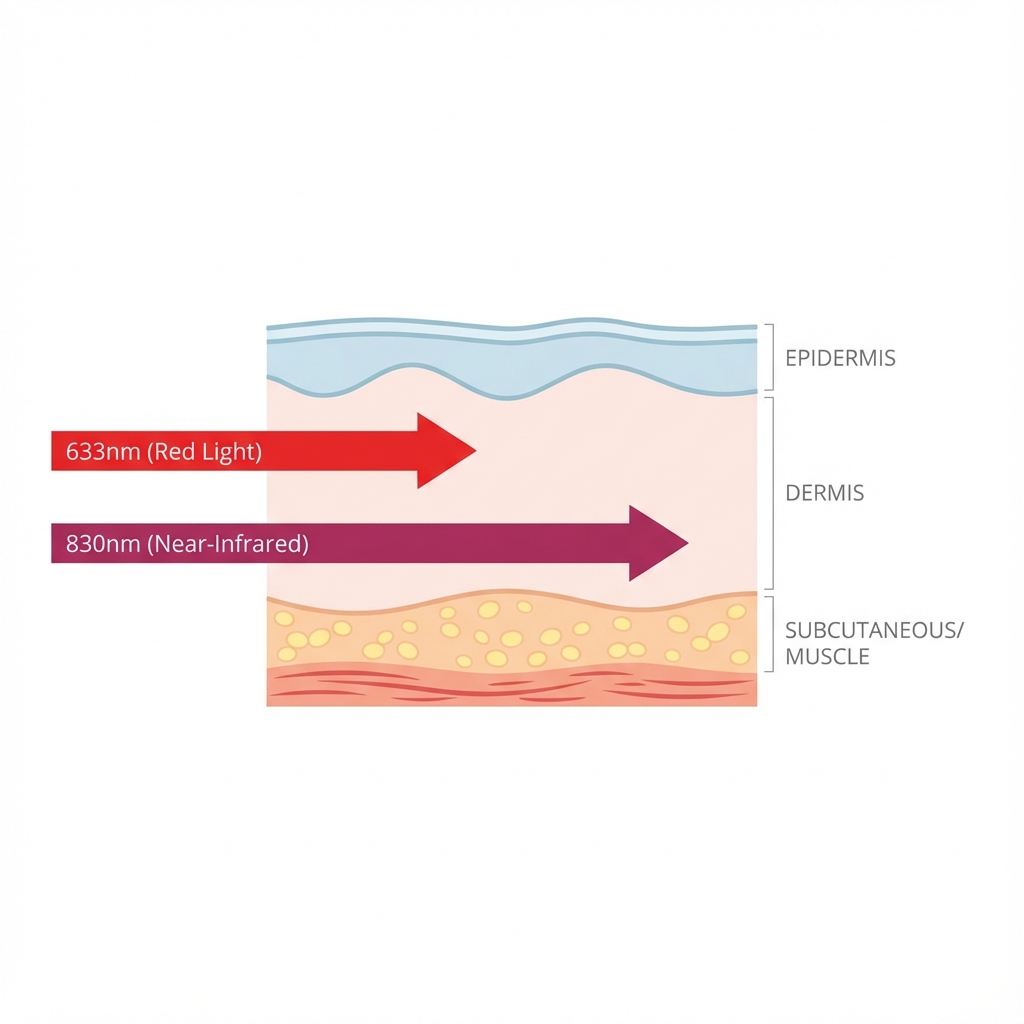
Why it's generally safe
- Non-Thermal: It doesn't rely on heating the skin to work.
- UV-Free: It does not damage DNA like the sun does.
- Non-Invasive: It doesn't break the skin barrier.
Where the risk lies
- The Eyes: Bright light can cause strain or retinal stress.
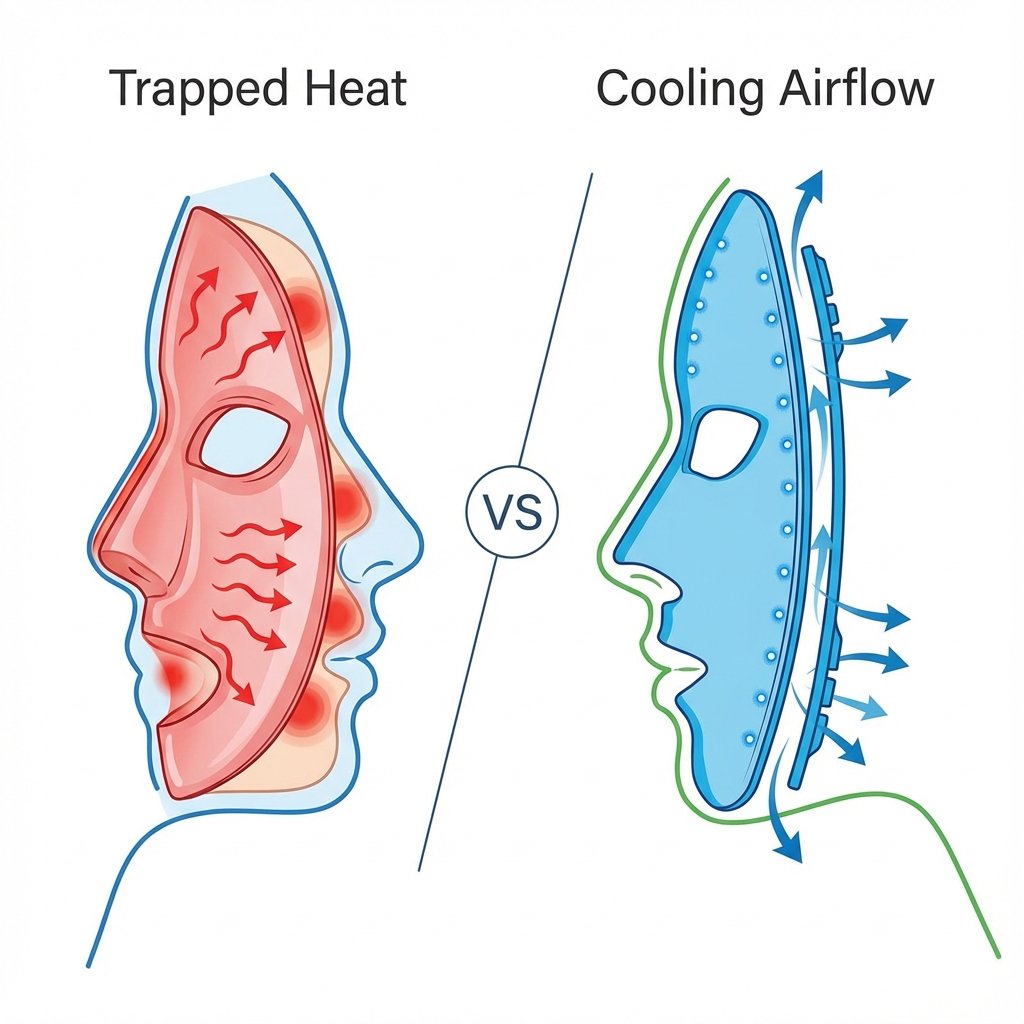
- The Device: Cheap masks can malfunction or overheat.
- The User: Specific drugs make you allergic to light.
Who Should NOT Use LED Masks
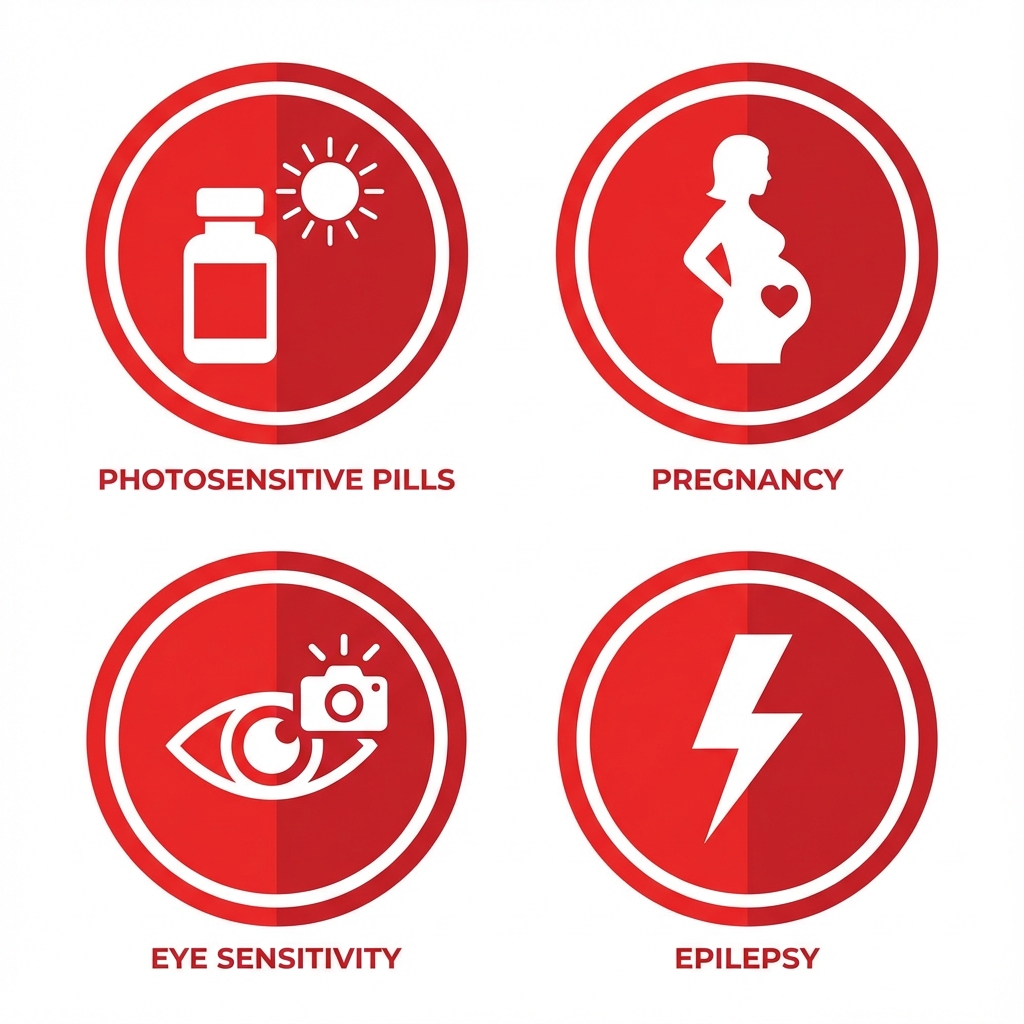
Do not use these devices if any of the following apply to you:
- Photosensitising Medication: If your pill bottle has a "Sun" warning symbol (e.g. Doxycycline, Isotretinoin/Accutane, certain diuretics), you are at risk of a severe reaction.
- Epilepsy / Seizures: Especially light-triggered epilepsy. The pulsing or brightness can be a trigger.
- Eye Diseases: Inherited retinal diseases or albinism. Consult an ophthalmologist first.
- Pregnancy: As a precaution, most brands advise against use due to a lack of clinical trials on pregnant women.
- Active Lupus / Autoimmune: If you have systemic lupus erythematosus (SLE) or other photosensitive autoimmune conditions.
The Eye Safety Debate
Can you just close your eyes? Or do you need goggles?
- Red/NIR Light: Generally safer. Many users simply close their eyes. However, for maximum safety, we recommend using the blackout rubber inserts provided with premium masks.
- Blue Light: High Caution. Blue light is more energetic and has been linked to oxidative stress in the retina. You MUST use eye protection with Blue light settings.
- The "Neutrogena" Lesson: Years ago, a popular mask was recalled because of a theoretical risk to a small group of users with underlying eye issues. It reminded the industry that eyes are not to be messed with.
Myths vs Reality
| Myth | Reality |
|---|---|
| "It's just light, it can't hurt me." | Light is energy. If you are on photosensitising drugs, "just light" can cause a blister-like rash. |
| "Eye protection is optional." | For Blue light, it's mandatory. For Red, it's highly recommended, especially if you have sensitive eyes or migraines. |
| "More is better." | False. Overuse can lead to redness and dryness. Stick to 10 minutes, 3-5 times a week. |
Why "Cheap" Can be Dangerous
Safety isn't just about the light—it's about the electronics.
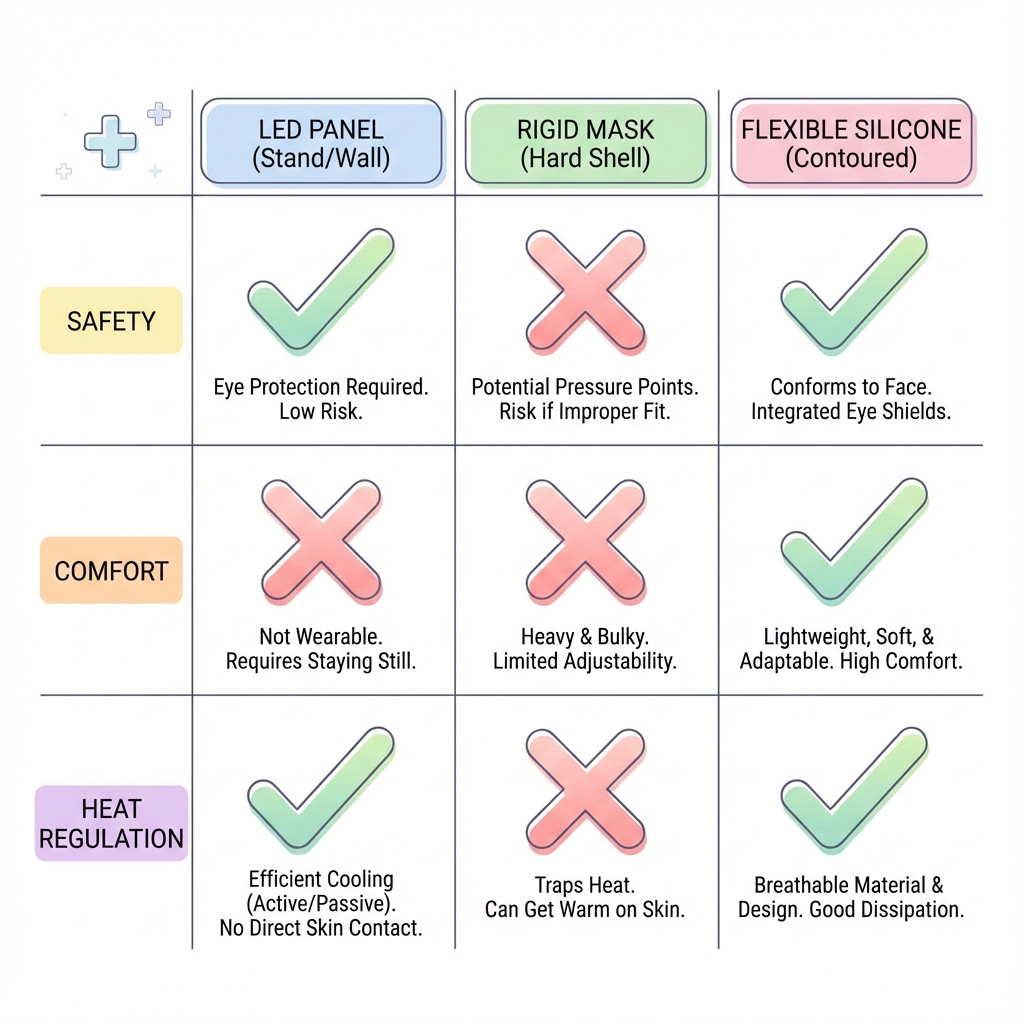
| Irradiance Accuracy | High (Clinically Verified) | Unknown / Variable | High |
| Heat Regulation | Excellent | Poor (Hot Spots) | Excellent (Air Cooling) |
| Eye Safety Standard | High (IEC Standards) | Low | Requires Goggles |
Safety FAQs
Can LED masks damage my eyes?
Red and Near-Infrared light are generally safe for brief exposure, but prolonged staring at bright LEDs is not recommended. Blue light carries a higher risk of retinal stress. Most reputable brands provide eye guards (goggles) and meet international safety standards (IEC 62471). We always recommend using blackout goggles.
Is it safe to use everyday?
Safe? Technically yes. Effective? No. Your cells have a saturation point. Using an LED mask daily usually adds no extra benefit and can lead to dryness or irritation. Follow the brand's protocol, usually 3-5 times a week.
Can I use it while pregnant?
There are no studies proving it is harmful, but there are no studies proving it is safe either. Because of this lack of data, almost all manufacturers (and doctors) list pregnancy as a contraindication. Avoid use unless cleared by your doctor.
Will it burn my skin?
A proper LED mask uses 'non-thermal' light, meaning it doesn't heat tissue like a laser. However, the device ITSELF can get hot. Cheap electronics can overheat, causing contact burns. Stick to reputable brands with heat-management technology.
Sources & Citations
- Neutrogena Recall Report: Blue light retinal safety analysis.
- IEC 62471 Standards: Photobiological safety of lamps and lamp systems.
- Dermatology Times: LED safety profile in pregnancy vs. lack of data.
- Survey Data: User reports of eye strain with un-guarded masks.
Choose Safety First
We only review and recommend FDA-cleared masks that meet strict safety standards.
Medical Disclaimer: GlowLab does not provide medical care. LED masks and skincare actives may interact unpredictably for sensitive users. Always consult a dermatologist if you use prescription actives (tretinoin, azelaic acid, antibiotics) or have a skin condition.